Save to Pinterest
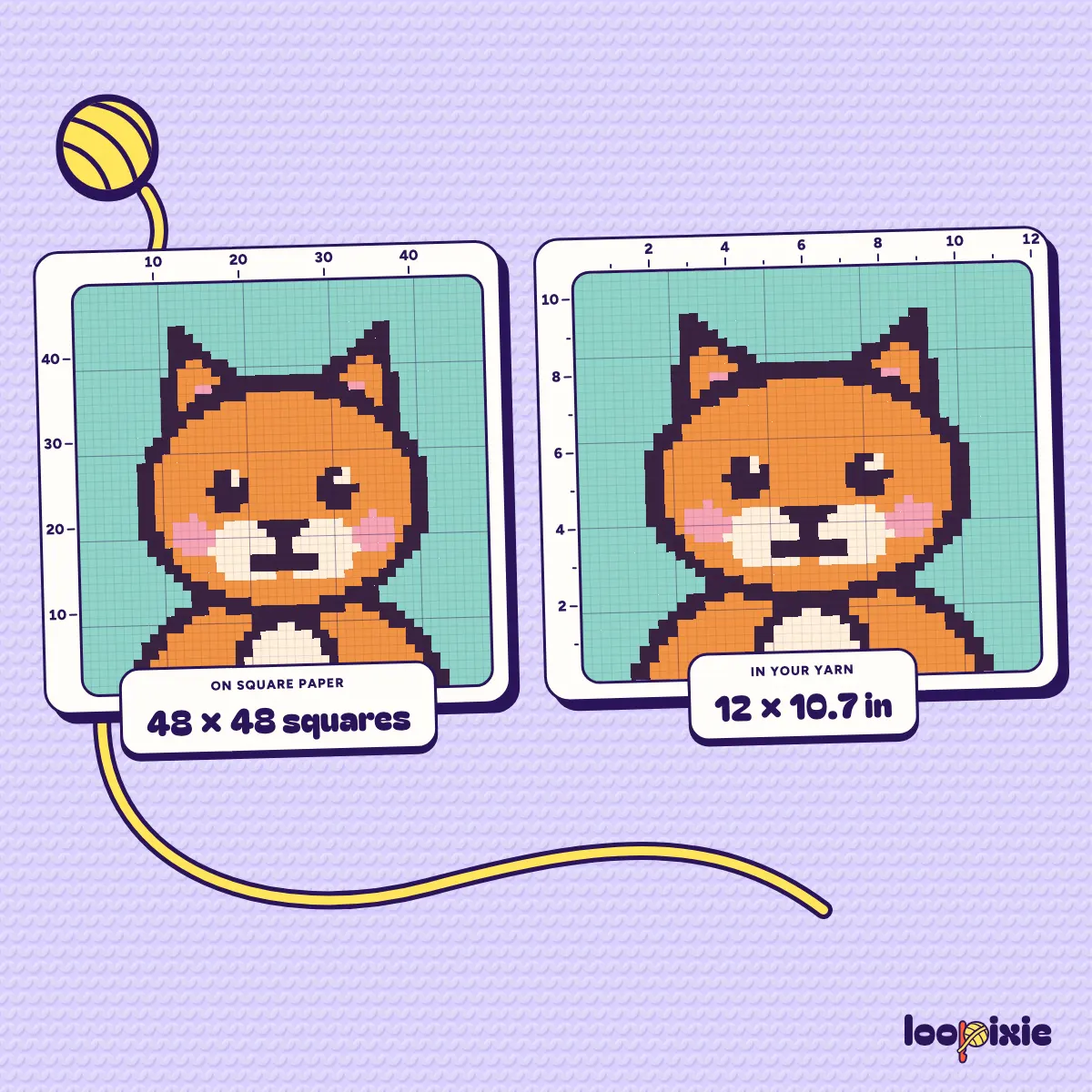
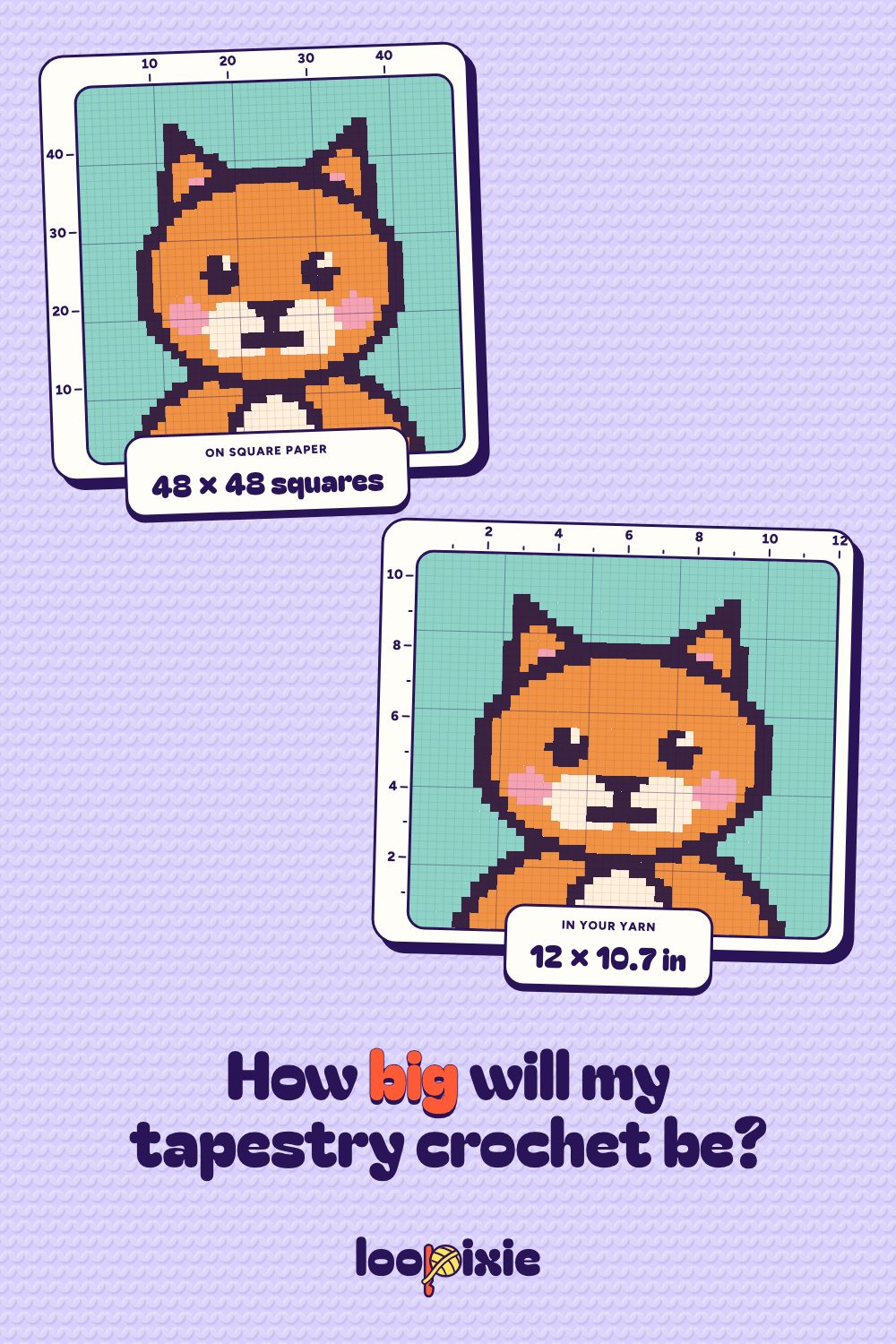
Say your swatch has 16 stitches and 18 rows in 4 inches. This gauge is just an example, so measure your own. It works out to 4 stitches and 4.5 rows per inch. The ginger cat chart in the picture is 48 stitches by 48 rows, so it comes out 48 divided by 4 = 12 in wide and 48 divided by 4.5 = 10.7 in tall (30.5 by 27.1 cm).
So at this gauge the square chart makes a piece that is wider than it is tall. Real stitches are rarely square, which is why pictures can look squashed. To skip the math, put your own swatch into the free size calculator.
How many stitches do I need for a pillow or a blanket?
Work backwards: multiply the width you want by your stitches per inch, and the height by your rows per inch. Here are common blanket sizes with the stitches and rows they need at the example gauge. Sizes vary; these are typical examples, not rules, and at your gauge the counts will differ.
| Blanket | Stitches | Rows | Stitches in all |
|---|---|---|---|
| Baby, 36 by 36 in (91 by 91 cm) | 144 | 162 | 23,328 |
| Lap, 36 by 48 in (91 by 122 cm) | 144 | 216 | 31,104 |
| Throw, 50 by 60 in (127 by 152 cm) | 200 | 270 | 54,000 |
| Twin bed, 66 by 90 in (168 by 229 cm) | 264 | 405 | 106,920 |
A 16 by 16 in (41 cm) pillow at the example gauge needs 16 times 4 = 64 stitches and 16 times 4.5 = 72 rows.
People often pick the chart size first and find out the finished size later. “100 by 100 stitches” sounds modest. At the example gauge it is 25 in wide by 22.2 in tall (63.5 by 56.4 cm), and 10,000 stitches of work. “350 by 350” is 87.5 by 77.8 in (222 by 198 cm), a blanket for a bed, and 122,500 stitches, more than fifty times the cat. Check the finished size before you buy the yarn.
Detail and size go together: at one gauge, more detail means more stitches, and more stitches means a bigger piece. A small, detailed piece needs thinner yarn and a smaller hook. For help choosing how many stitches your picture needs, see how to turn a picture into a tapestry crochet chart.
How do I measure my tapestry crochet gauge?
The counts above are at the example gauge; yours come from a swatch. Crochet one at least 6 inches (15 cm) square with your yarn and hook, carrying the colors as you will in the piece. Tapestry crochet is usually single crochet (the US name; UK patterns say double crochet), with the yarns you are not using carried inside the stitches. The math is the same for any stitch.
Lay the swatch flat and count the stitches and rows inside the middle 4 inches (10 cm), away from the uneven edges. Divide each count by 4 for your stitches and rows per inch.
What changes your gauge?
- Yarn and hook. Thicker yarn and a bigger hook make bigger stitches, so a bigger piece from the same chart.
- Your tension. Two people with the same yarn and hook often get different gauges. Your gauge may differ from the one printed in the pattern.
- Carried strands. Each extra yarn carried inside the stitches makes them a little taller, and the fabric usually comes out tighter than one-color single crochet.
- The stitch. Half double crochet rows are taller than single crochet rows; a chart drawn for one changes shape in the other.
Why does my tapestry crochet picture look squashed?
Because many charts are drawn on square cells, and real stitches are rarely exactly square.
On square graph paper every stitch is as tall as it is wide. At the example gauge of 4 stitches and 4.5 rows per inch, a stitch is 0.25 in (6.4 mm) wide and 0.222 in (5.6 mm) tall. It is 1.125 times as wide as it is tall, or about 13% wider. (In a square swatch that number is simply the rows over the stitches, 18 divided by 16.) Each row of the crocheted cat is shorter than its stitches are wide, so the cat comes out flatter than the chart, with a broader face.
It goes the other way too. With 18 stitches and 16 rows in 4 inches, a stitch is 1.125 times as tall as it is wide, about 13% taller, and the same cat comes out 10.7 in wide by 12 in tall: a long, thin cat.
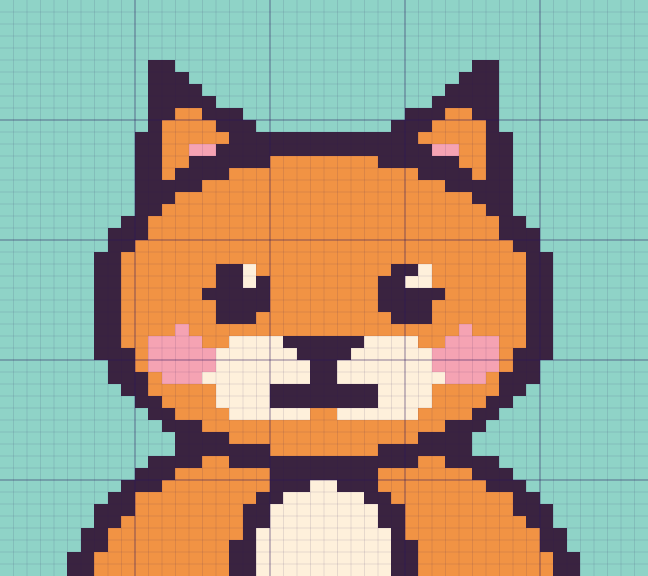
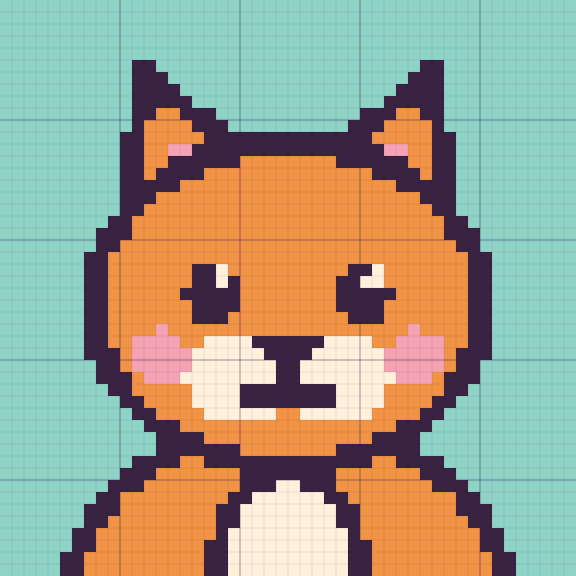
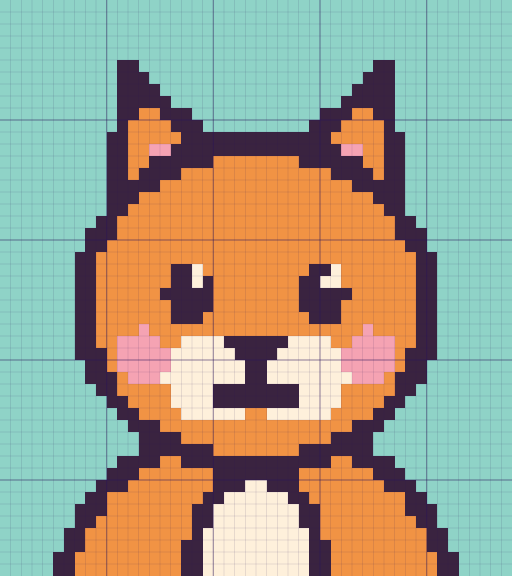 The same 48 by 48 chart three ways: at 16 stitches and 18 rows in 4 inches (left), on square paper (middle), and at 18 stitches and 16 rows (right).
In the published tapestry crochet patterns we checked, stitch shapes ran from about 11% taller than wide to about 17% wider than tall. Measure your own swatch to find your stitch shape.
Is it the chart, your gauge, or missing rows?
A squashed piece can have more than one cause: your tension, the hook, skipped rows, or the chart itself. Check them in this order.
- Count your rows against the chart. If the chart has 48 rows and the piece has 44, four rows were skipped: a counting problem, not a gauge problem.
- Measure. Lay the piece flat, or a swatch worked the same way, and count the stitches and rows inside the middle 4 inches (10 cm). Do not stretch it.
- Work out your stitch shape. Divide your rows per inch by your stitches per inch: 4.5 divided by 4 = 1.125 in the example. Above 1, your stitches are wider than tall; below 1, taller than wide.
- Compare with the chart. If the chart uses square cells and your result is not 1, the picture will change shape. A result of 1.125 means it will be about 13% wider for its height than the drawing. If the chart gives the stitch shape it was drawn for, compare your result with that.
How do you fix it?
Use a chart drawn for your stitch shape. Its cells are as wide and as tall as your stitches, so what you see on the chart is what comes off the hook. Graph paper made for tapestry crochet exists partly for this reason: it allows for the shape of the stitches.
Redraw the chart with more or fewer rows. Keep the width, because the width sets the detail, and change the rows. The cat is 12 in wide at the example gauge, so to come out 12 in tall it needs 12 times 4.5 = 54 rows, not 48 (a shortcut: stitches times stitch shape, 48 times 1.125 = 54). Redraw the whole picture to fit 54 rows. Six rows copied in here and there can stretch some parts and not others, and leave steps in the curves.
Change the hook or the yarn? Changing the hook or yarn changes the size of the piece. A bigger hook makes every stitch wider and taller, so the whole piece grows. The stitch shape may change a little too, but do not count on it to make your stitches square. Swatch and measure again.
How do you resize a tapestry crochet pattern?
The same ideas apply to a pattern someone else made. Keep the chart and use thicker yarn and a bigger hook for a bigger piece, or thinner yarn and a smaller hook for a smaller one. The stitch count stays the same. The piece grows or shrinks as the stitches change size, and their shape may change a little too. Measure a swatch to work out the new size and stitch shape.
To make a bigger piece at the same gauge, with the same yarn and hook, you need more stitches. Redraw the whole picture at the new stitch count. Adding rows and columns here and there stretches some parts without stretching others. Then check the new chart’s shape against your swatch.
Start with a swatch. It tells you how big the piece will be and what stitch shape to draw the chart for.