Save to Pinterest
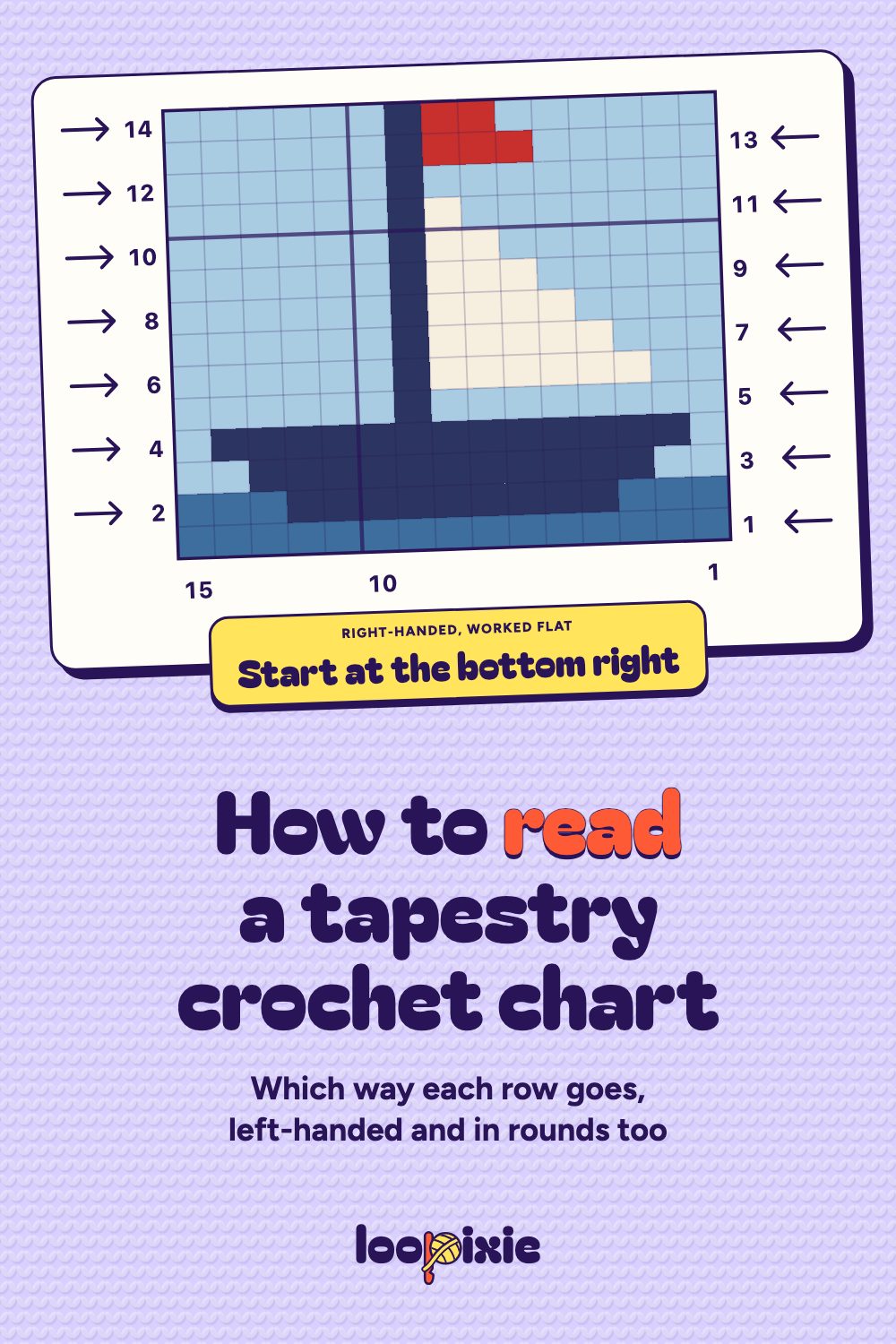
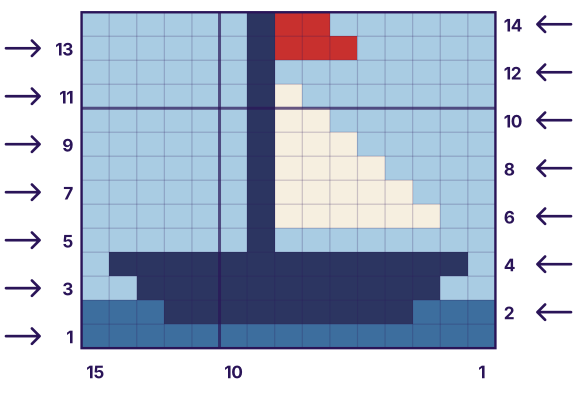
If you crochet right-handed, start at the bottom right. Row 1 is the bottom row of the chart, and each square is one stitch in the color of that square. Turn your work at the end of every row, and read Row 1 from right to left, Row 2 from left to right, and so on, back and forth up to the top. On our charts, and on many others, each row’s number sits on the side where that row starts.
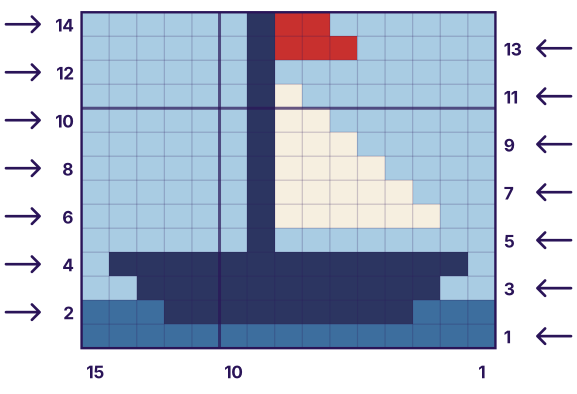 A sailboat, 15 stitches by 14 rows, worked flat by a right-handed crocheter. Odd rows start on the right, even rows on the left.
If you crochet left-handed, or work in rounds, the directions change. Both are below, along with how to keep your place and what to check when the picture comes out wrong.
Why does every other row go the other way?
Because you turn your work. Right-handed, you always crochet from right to left. At the end of Row 1 you turn the piece over, and the stitch at the chart’s left edge is now the first one under your hook. So Row 2 starts at the left edge of the chart, and you read it from left to right.
On our charts, the odd rows are right side rows (RS): you work them with the front of the piece facing you. The even rows are wrong side rows (WS). Tapestry crochet shows the picture on both sides, but the back shows it mirrored.
What happens if you read every row from the right?
Every even row comes out backwards. The odd rows are fine, so the picture breaks up in stripes: on the sailboat, the mast zigzags and the sail falls apart.
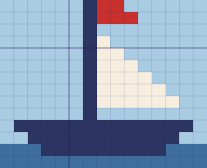
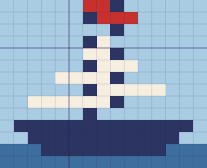 Left: the sailboat as charted. Right: the sailboat worked flat with every row read from the right.
If the whole picture comes out mirrored, check two things. First, look at the other side of the piece: the back shows the picture mirrored. Second, check where each row started. A right-handed crocheter who starts the odd rows at the chart’s left edge and the even rows at its right edge mirrors every row.
What do the squares, colors and numbers mean?
- One square is one stitch. In tapestry crochet that is usually single crochet (US terms; UK patterns call it double crochet). The color of the square is the yarn for that stitch.
- The key names the colors. Our patterns give every yarn a name, like Sky blue or Navy, and show them with the chart.
- The stitch numbers count from the right on our charts, where Row 1 starts, so stitch 1 is the first stitch of Row 1. The numbers stay put on every row: on the sailboat, Row 2 starts at stitch 15 and ends at stitch 1.
- Bold lines mark every tenth stitch and every tenth row. Count from the nearest bold line instead of from the edge.
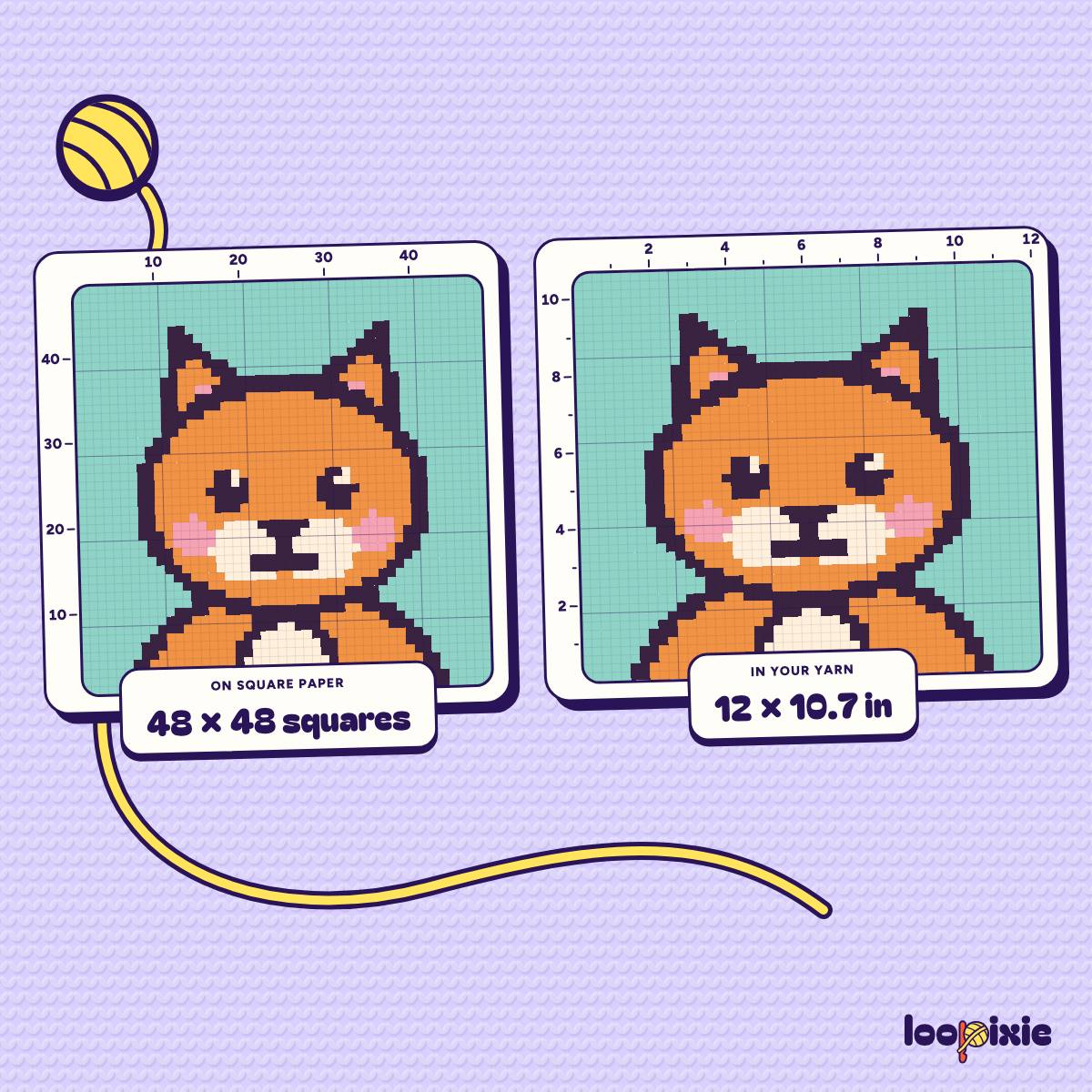
Charts are often drawn on square graph paper, but stitches are not always square, so the finished picture can come out wider or taller than the chart. How big will my tapestry crochet be? explains why, and how to check before you start.
How do I follow a row without losing my place?
Read the row in groups of stitches of one color. Row 7 of the sailboat, read from right to left, is 3 sky blue, 5 cream, 1 navy and 6 sky blue. Count each group as you go. Use the bold lines to check your count.
Many patterns write the rows out for you. Our free patterns do, like this:
- Row 7 (RS): 3 Sky blue, 5 Cream, 1 Navy, 6 Sky blue
- Row 8 (WS): 6 Sky blue, 1 Navy, 4 Cream, 4 Sky blue
Written rows list the colors in the order you work them, so you do not reverse them after a turn. Row 8 starts with the chart’s six sky blue stitches on the left. (Left-handed? See the last section.)
A few habits help:
- Cover the rows above. Lay a ruler or a strip of paper just above the row you are working. You see that row, and the finished rows below it, which should match your piece.
- Check off each row on a printout as you finish it.
- Compare every few rows. Hold the piece with the front facing you and check it against the chart. A wrong stitch is easier to fix while it is in the previous row.
When do I change color?
At the end of the stitch before the new color. Work that stitch until two loops are left on the hook, then pull the new color through both loops. The next stitch starts in the new color. On Row 7 of the sailboat, the third sky blue stitch ends with cream, ready for the five cream stitches.
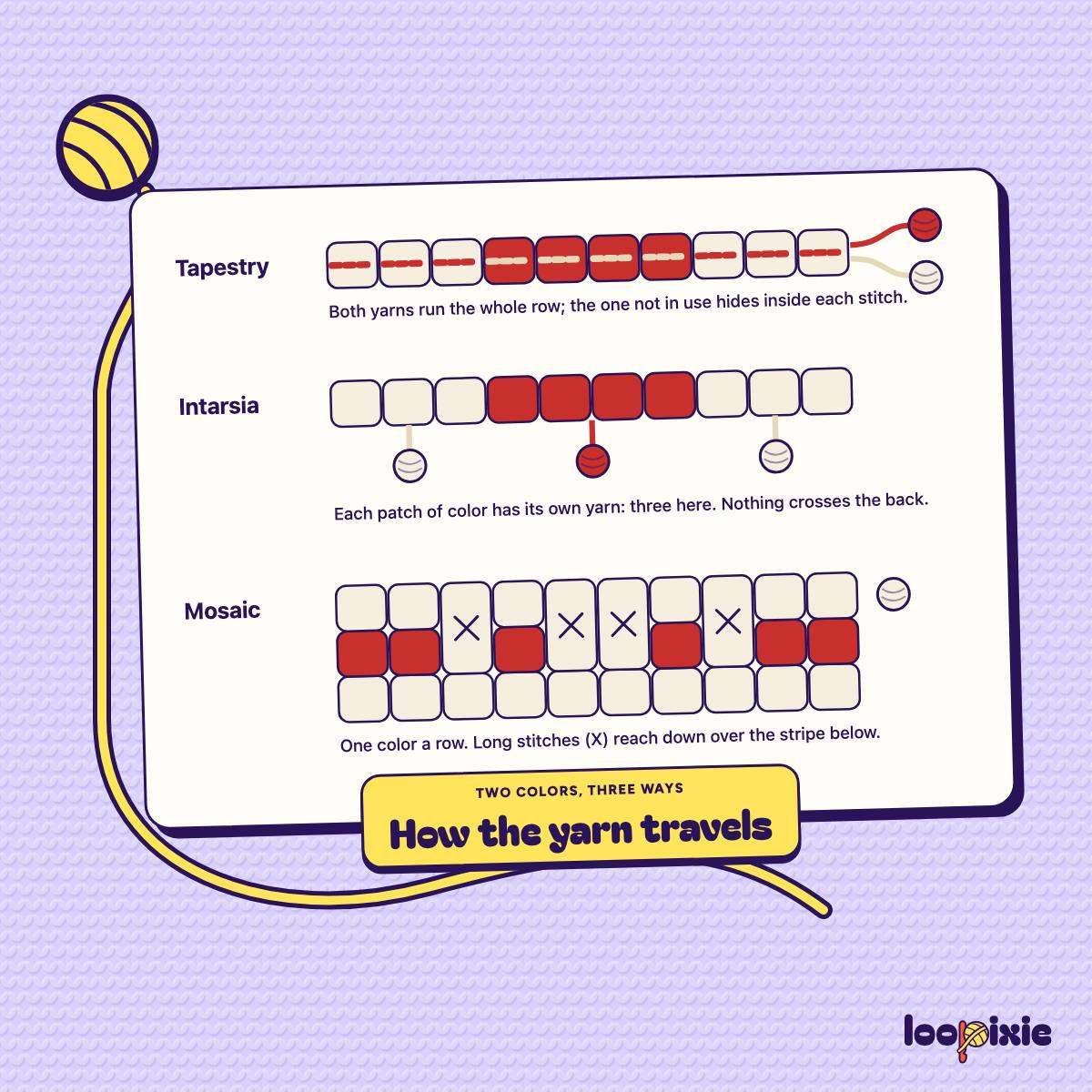
Carry the colors you are not using along the top of the row below. Crochet over them so they sit inside the stitches.
How do I read a chart worked in rounds?
Worked in rounds without turning, the front always faces you. Right-handed, read every round from right to left. Left-handed, read every round from left to right. Each row of the chart is one round. Round 1 is at the bottom. Mark the first stitch of each round so you know where the next round starts.
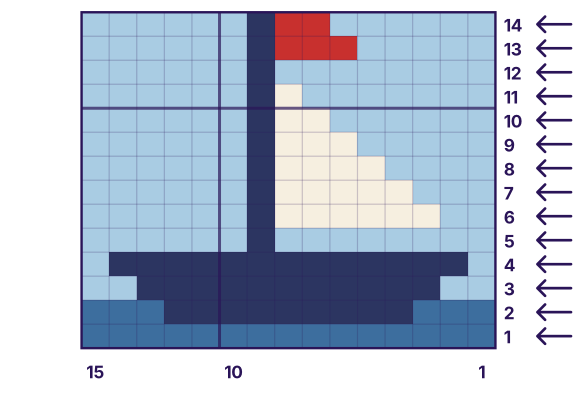 The sailboat worked in rounds by a right-handed crocheter: every round starts on the right.
Some flat pieces are worked without turning: you cut the yarn at the end of each row and start the next row at the same edge. Read each row as you would a round without turning. Some patterns join their rounds and turn, and then the rounds go back and forth like flat rows. The pattern says which.
The chart is the same picture either way; only the reading changes. Written rows are different. In written rows for flat work, every other row starts at the chart’s left edge, so you cannot use them for rounds without turning. Follow the chart instead, or written rows for rounds.
Single crochet worked in rounds without turning leans a little, so the picture can slant slightly. That is the stitch, not a reading mistake: Why is my tapestry crochet slanted? explains it and what helps. What else changes in rounds, and how to make a pillow as a tube: Can I work the same tapestry crochet flat and in the round?
How do left-handed crocheters read a chart?
Left-handed, you crochet from left to right, so read every row the other way: Row 1 from left to right, Row 2 from right to left, and so on up. The picture comes out as charted, the right way around.
 The sailboat worked flat by a left-handed crocheter: odd rows start on the left, even rows on the right.
Two things to watch:
- Written rows usually follow right-handed order. Read each row from its last color back to its first: Row 7 becomes 6 sky blue, 1 navy, 5 cream, 3 sky blue.
- Do not also flip the chart. Reading every row the other way already keeps the picture the right way around. Flipping the chart as well mirrors it.
Whichever hand you use and however you work, ask two questions before each row: where does it start, and which way does it go? Check the first few rows against the chart.